
Light was beginning to fade quickly that cool October evening. I was starting to second guess myself on whether I should have opted to sit a different area instead of the point system I was on. But the wind was correct for placing a buck on this point that day and I was already 4 hours into it, I was pretty much committed until dark. That’s when a limb snapped, about 100 yards in front of me and to my left. Then, right on cue, the steady paced walk we all know, the cadence of a buck working his way through the timber. I frantically scanned the direction the sound was coming from as I slowly reached for my bow. I couldn’t for the life of me, lay eyes on this deer and it was dark enough that at one point I tried using my bino’s in hopes of locating him but to no avail. Light finally gave up for the day as I sat there, listening to the footsteps slowly fade into the darkness of the timber. As I walked back to my truck that evening, I had a little more of a pep in my step and a rewarding feeling in my gut. That might sound weird to many, as I was coming out empty handed without even seeing this deer. But for me, it was validation that my scouting of the spot in the off season and my hunch was correct. I wish I could say this story repeats itself every season on a regular basis, but the fact is, hunting deer in the mountains is tough, and you’ll swing a miss far more often than you hit on something.
Deer hunting in my home state of Pennsylvania is steeped in traditions and lore dating back to a time when hunters wore Woolrich and Filson wool almost exclusively.  Hunting wasn’t just a hobby; it was a way to fill the freezer and feed a family. Deer were far less plentiful then, and finding even a handful took considerable time and effort. I remember my dad telling stories of families coming together for deer drives from daylight to dark, sometimes harvesting only one or two deer. Venison was shared or traded for moonshine, whiskey and other valuable food items.
Improved management caused deer populations to surge through the 1990s, when I began hunting. It wasn’t uncommon to see herds of twenty or thirty deer, but bucks were generally small. A 100-inch eight-pointer was considered a big one, and even the deer’s bodies were smaller.
Then came what I consider Pennsylvania’s golden era of deer management. Doe numbers were reduced, while antler restrictions gave younger bucks more time to develop larger racks and bodies. Today, there may be fewer deer, but they are generally larger and healthier, and Pennsylvania is producing more bucks that rival those we’re accustomed to seeing in the Midwest. A 150-inch buck was once almost unheard of here, but now we see several in that class every season. They’re out there each fall, the challenge is finding them. That’s what I’m going to get into here.
I’d like to tell you that I spend countless days in the field each year scouting, hunting and chasing bucks. I’d like to say it has my undivided attention most of the year, that I always fill my buck tag and that I’m an expert—but none of that would be true. Plenty of hunters are far better at chasing mature bucks than I am. If you’re looking for advice from an expert, this article may not be for you.
If you’re at a point in life when you have all the time in the world, make the most of it. I sure miss those days. Like many hunters, my time is limited. I have a wife, kids, dogs, cats and a full-time job in IT that keeps me busy. Providing for my family and spending quality time with them come first, so when I do have time to scout or hunt, I need to make the most of it.
I’d like to share my perspective on hunting mountain bucks and hopefully help hunters like me, those balancing family and work with a passion for chasing whitetails, make better use of their time and find more success this fall. Let’s dive in.
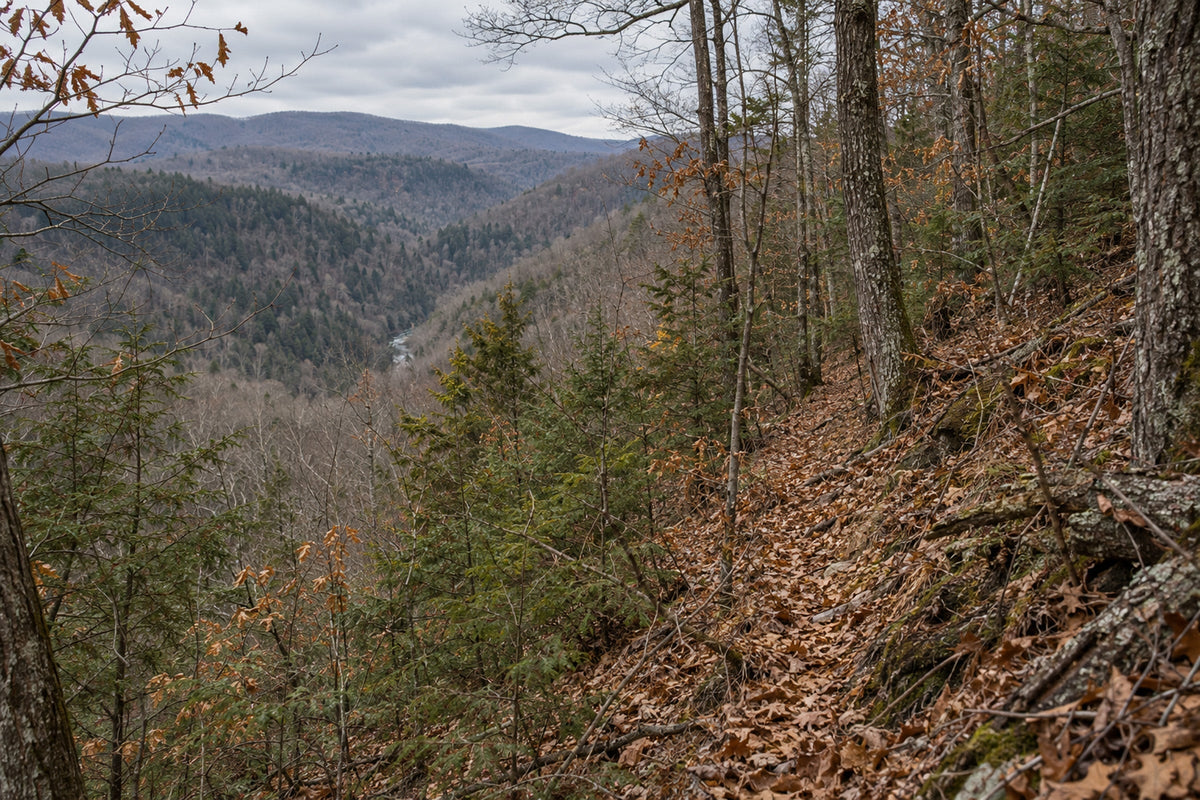
Hunting whitetails in the mountains of the east is a unique and challenging experience. There’s rarely any ag. Instead, you’re faced with a sea of trees across mountains of steep terrain, choked with thick cover only interrupted by the occasional clearcut or mature stands of oak. Deer densities in my areas are quite low and you better be prepared to come up empty on plenty of sits as you work through areas, hunting down the bucks. The terrain, thick vegetation and food sources mean a buck can be incredibly hard to catch up to. Once a buck reaches 4 ½ he’s truly become a master of his craft and gets harder to kill afterwards. Add all these things together and I truly believe hunting whitetails in the Appalachian Mountains of the east coast the pinnacle of whitetail hunting.
Mature Buck Behavior
In more than 30 years of hunting, I’ve been fortunate to have access to some great private land—properties that have consistently produced mature bucks. I have several of them hanging on my wall, along with plenty of stories about near misses and the ones that got away.
Today, I still hunt some of that land, but I mostly focus on new properties and public ground. I suppose I grew bored with land I knew so well and began craving the adventure and challenge of learning somewhere new. Over the years, my encounters with mature bucks have taught me a great deal about their behavior and tendencies, accelerating my learning curve despite plenty of failures I’d rather not discuss because they still make me mad. Ha!
What I’ve discovered while pursuing these bucks in new places is that their basic needs remain the same and so do many of their tendencies.
Security cover is king.  Until I started relishing hunting thicker cover, and most importantly edge cover, I didn’t consistently put myself close to mature bucks. Mature bucks are almost psychotic about staying within or very close to security cover. When I’m scouting new places, I will immediately write off an area if it doesn’t contain the cover a buck needs to feel comfortable. Simply put, if I can see clearly for more than 75 yards and there is no nearby cover edge, I keep walking.
The second thing was they use terrain features to a fault. In mountain country, there is no shortage of various features and mature bucks will use them almost to the same psychotic degree they use cover. Back when I was making more mistakes than I care to admit, I always thought a buck slipping by me, just out of range was just bad luck that day, but once I started paying better attention to how the land laid out around me, it became clear that these deer were using very distinct terrain features and lines to move by me. If you’re scouting an area similar, pay very close attention to the leeward side of the ridge or point because there is a good chance, there is a faint trail along there that only buck’s use. It’s perfect, as they can smell anything on the top and have easy, fast access to cover or dip below the ridgeline in the blink of an eye. When scouting or looking at a spot and deciding on where I want to setup when hunting it, I will almost always setup on the downwind side of what I think is this faint trail.
Wind and Thermals in the mountains do maddening things and it took me a long time to understand the thermal part of the equation. I can’t tell you how many times I’ve headed in to hunt for an evening because the wind was right on my phone, yet when I got there or close to it, the wind was the exact opposite. Thermals are as right as rain in the mountains, and I think much easier and more predictable. This is a key reason mature bucks use rising and falling pockets of air so keenly. In steep, uneven terrain, winds constantly swirl and do crazy things. It can be very unpredictable, and the intensity and direction of the wind can be a nightmare. I don’t think it’s any different for a mature buck really, he needs as precise of information of what is going on around him, and swirling winds don’t help matters. Think about what I mentioned earlier about terrain and how he wants to travel, it lines up with thermals. The winds usually lay down to flat calm right before dark and you can bet you will feel a cool downward draw of air as it gets pulled down the mountain sides. He’s using this as he slips along the edge of the ridge and it’s something that took me a long time and some prodding from others I follow, to realize this.
Hunting buck beds in the mountains is difficult. Deer seem to have nearly unlimited bedding opportunities, and mature bucks often choose areas where they can adjust their beds as winds and thermals shift throughout the day. Making matters more challenging, their movements between bedding areas can cover considerable distances depending on the time of year, available food and, of course, does. The seasonal shifts we see elsewhere are often more pronounced and occur on a larger scale in the mountains.
 I think back to a buck I sold my soul chasing a few years ago. I first encountered him as a big three-year-old during the early season, but I never saw him again that year. The following season, he returned to the same area, slipped around me and disappeared once again. Then, on an extremely cold afternoon in mid-January, he came right to me—but sensed something was wrong and spooked.
A year later, he was killed during Pennsylvania’s November rifle season nearly two miles away. I later learned that he spent a great deal of time on that side of the mountain, even though I had regularly seen him on mine. Research from Penn State involving collared bucks has shown that mountain bucks here can use an annual home range of roughly five square miles.
My home state is one of the largest hardwood producing states in the country and it’s no secret we usually have no shortage of acorns each fall. This also makes the bucks hard to hunt because they simply don’t have to go far to eat these high value foods in October. Between all the browse in clear cuts and other places and the mountains seeming to rain acorns, all he needs to do is stand up and eat. My thinking is these deer shift from good food to good food and find the needed bedding very close by. The exception to this is pre rut traveling and of course the rut itself where does take precedence.
The final thing I want to mention is how much different mature bucks seem to act compared to the rest of the bucks and deer herd in general. In all my years, I have only ever witnessed two, large, racked bucks that I’m pretty sure were both 4 ½ or older, being overly aggressive. These two bucks had a doe pinned to the ground, attempting to breed her, while still trying to fight each other off, eventually getting into a pretty good shoving match until they realized the doe they were fighting over was trying to get away. Perhaps its lack of competition here as we certainly don’t have the sheer numbers of older age class bucks, but even on private land I hunt that does, I just don’t see it. None of these things I’ve experienced over the years is a hard set in stone idea or thing, however. Each deer has its own personality and tendencies and each area you hunt is different. Keeping an open mind and a willingness to learn continuously is paramount. As I said, I am not an expert in this, but I am a straight A student in class.
Scouting
I would like to share a bit about how I scout and what I’m trying to accomplish. Remember, I don’t have the luxury of scouting more than a day a week, sometimes not even that in the winter months. So, when I do go, I must have a plan and I have to be efficient.
The idea when I’m looking at a potential spot is simple. I want to stack as many things into my favor as possible in any given setup. For example, say I approach what I think is a bedding point that I marked on OnX. As I’m getting there, I’m starting to see a lot of thick cover leading out onto that point. That’s a chip stacked. Then I’m looking at trail systems coming out of there and I find large rubs from last fall sprinkled about. That’s another chip on the pile. Let’s say there is a distinct edge on one side of this point, separating thick from more open timber. Bingo, I’m leaning at hanging in a tree on that edge. What I know about him not leaving cover, I want to be over there, not out in the open hardwoods. That’s another chip. If I find beds on that point that look like buck beds, it’s a no brainer. The whole point is that with such large areas of land to hunt, you must do something to narrow the focus down and put yourself in the game.

I always start my scouting on the computer, using OnX and a combination of Cal Topo and even Google Earth. I’ll mark all the obvious stuff I like to hunt and check. Points, ridges, saddles, benches I can see with the topo, military crests, thermal hubs, and so on. I also look at the clear cuts in the area and cross check their age with our Game Commissions data to see how old they are and if they’re viable to look at. This is the starting point and as I keep mentioning, I’m short on time, I need to narrow things down. Using these technologies and various imagery helps me become more efficient and focus my efforts.
After I have a few properties pinned out, I choose one and head there to walk it in the winter months. This is where things can trip you up a bit as it does me at times unless I remind myself that its February. The absolute first thing I look for is the presence of security cover, but you need to visualize what the spot looks like in October. So many times, I have tricked myself, looking at a barren landscape of trees and often snow, that the spot is too open for a buck to feel comfortable in during daylight, only to find out that all the stubble and bare branches were a choked mess of cover in October. Don’t make the mistake I often did. The second thing I do is think about wind direction in October here and I let this dictate where I walk to. Think again about the bedding point area, if the point is facing due east, a buck could bed there on several different winds. Then I think about thermals for the spot and what they’re going to be doing when the “witching hour” arrives in the evening and he’s up on his feet. Finally, I look for big rubs, and hopefully find a bed that confirms my suspicions. The one thing I suck at and am trying to get better at, is trying to figure out the time of year he may be there. My best guesses have proved wrong in the past so as I figure this out, I throw as many sits at a spot as I dare before deciding he isn’t there.
Micro features on the landscape, in my opinion, is the money maker when it comes to narrowing down focus on where I will end up sitting. There is no way to find these but by walking and seeing them. A small cut in the side of the mountain, a tiny bench that doesn’t show up on topo maps, depressions on the end of a point, long narrow drainages are all examples of things that you just can’t find or see while e scouting, but they’re ideal locations to thoroughly look for and check when scouting. I’ve noticed that very old, almost imperceivable logging roads that were cut into the sides of the mountain are dynamite spots because if a buck wants to travel that side of the hill, it’s the only flat spot there and is easier traveling.
As I check areas and walk them, I do constantly keep tabs on what I feel are doe bedding areas and mark them. I’m also looking at trees a lot, but to be honest, with so many oaks, does it really matter here? Again, I stand by my statement, cover is king to a mature buck and I feel my odds are much higher focusing on where bedding may be, the security cover and terrain features that he feels comfortable walking around in.
In season scouting is something that I feel is as important or even more important than the off-season time spent and for good reason. If you’re on limited time to begin with, the last thing you want to do is waste a precious opportunity in the tree by sitting old sign. I used to be not so good at this and felt that I could just hunt harder and harder to make it happen. Sometimes it worked, but more often than not, it didn’t. Thinking about what I spoke about earlier of how nomadic these bucks tend to be here and seem to always be on the move or transitioning for one reason or another, it makes perfect sense to scout first, hunt second. I think it was said by a very well-known public land buck hunter that he probably scouts 80% of the time, and hunts 20%. Now, I still can’t bring myself to go to that extreme, but I am striving to do better at this. Last year I was pretty proud of myself, I pull pulled the plug on two hunts because I wasn’t seeing what I wanted to see on my way in, bailed and scouted my way into another spot and found better sign. Never stop learning and never stop trying to get a step ahead of the buck you’re looking for.
 The final scouting subject I’ll touch briefly on is trail cams. They’re a huge asset here, but if I’m being honest, I don’t use them as much as many do. I’d rather see that buck with my own eyes, bow in hand, than get his picture and be a week late. One thing I do often is use a bit of an unorthodox system. I don’t have dozens of cell cams at my disposal but have a bunch of inexpensive card cameras that I don’t care if they get stolen. I started hanging a cell cam in spots, and if I get some pictures of a good buck, I’ll hunt the spot, swap the camera to a card camera and leave it. Then I move the cell camera to another spot if I’m hunting it and repeat the process. This allows me to get real-time data from the spot initially, avoid wasting a precious hunting day if it’s dead and then move the camera to another likely area. That said, I don’t put a lot of stock in cameras telling the full story of what a spot has to offer. I also tend to put cameras in places that are easy to access and where deer expect to encounter human scent. This minimizes the chances of contaminating an area I may need to hunt. I rarely use cameras to determine when a buck is there so I can move in and try to kill him. That’s just not me, and I feel like it takes something away from the hunt—or fair chase, if you will. I use cameras primarily to catch a glimpse of a buck I may want to hunt. Most of my pictures are taken around 2 a.m., with the buck standing in the middle of a clearing, opening in the woods or logging road.
The Sit
The hunt is the fun part and after all the scouting, preparations through the year, its finally time to decide where and when to sit a spot. It’s simple for me really. If you have enough spots planned out in advance, choose one of them based on wind and access it as carefully as possible. I will throw a sit at this spot or that spot as I try to catch up with one of them. But there is a caveat to this and something I’ve made a living at over the course of my bowhunting career. That’s the idea of sitting a spot many sits until it happens. I do not subscribe to the idea of making only one sit in a spot and never going back. Not here in the mountains and big woods. Again, these deer may be a week away from being in that spot, or you may be a week behind him. If you’re scouting into spot, the sign is there and looks like it was done very recently, there is no reason in the world to not sit it a couple days in a row. A buddy of mine who is an avid musky fisherman says to me all the time, you don’t leave fish to go find fish. Same applies here. The same applies to travel corridor spots that bucks use. Just because he wasn’t there one day, doesn’t mean he, or another shooter won’t be there tomorrow. Sure, your scent may be there, but hopefully by the time he realizes it, it’s too late. These deer simply do not stay in one spot for very long but often come back through it at some point during the fall. Maybe it’s a week, maybe in three weeks and the only way to capitalize is to be there when he is again. I think too many hunters, in this ultra mobile world of hunting we’re living in, mobilize themselves right out of a shot opportunity because, well, they can.
Much of what I’ve talked about here revolves around evening setups. Hunting a pre-defined setup that I found the year before, or scouting my way into a new or old spot and hanging and hunting. However, I do hunt quite a bit in the mornings, even in early season. For one, it’s convenient for me to hunt the mornings and then do family things on the weekends. The air is cooler in the mornings and I get better movement before temps get too warm late morning. Bucks seem to mill around close to their bedding area for what seems like half of the morning in the big woods and mountains. There is often no sharply defined movement window like you see a lot in ag country and deer will file into bedding locations all morning long in no hurry to lay down for the day. Why not take advantage of this? If I know I can slip back behind them in the morning and be waiting for them, I surely won’t waste the opportunity. Again, I hunt when I can and won’t throw a good morning opportunity away just because it’s not “textbook” early season hunting. The big thing for me is scouting areas and knowing what tree I need to be in well before I decide to hunt it in the morning. There is nothing worse than wandering into a spot in the dark and then spending half your time trying to find a suitable tree in the dark.
Conclusion
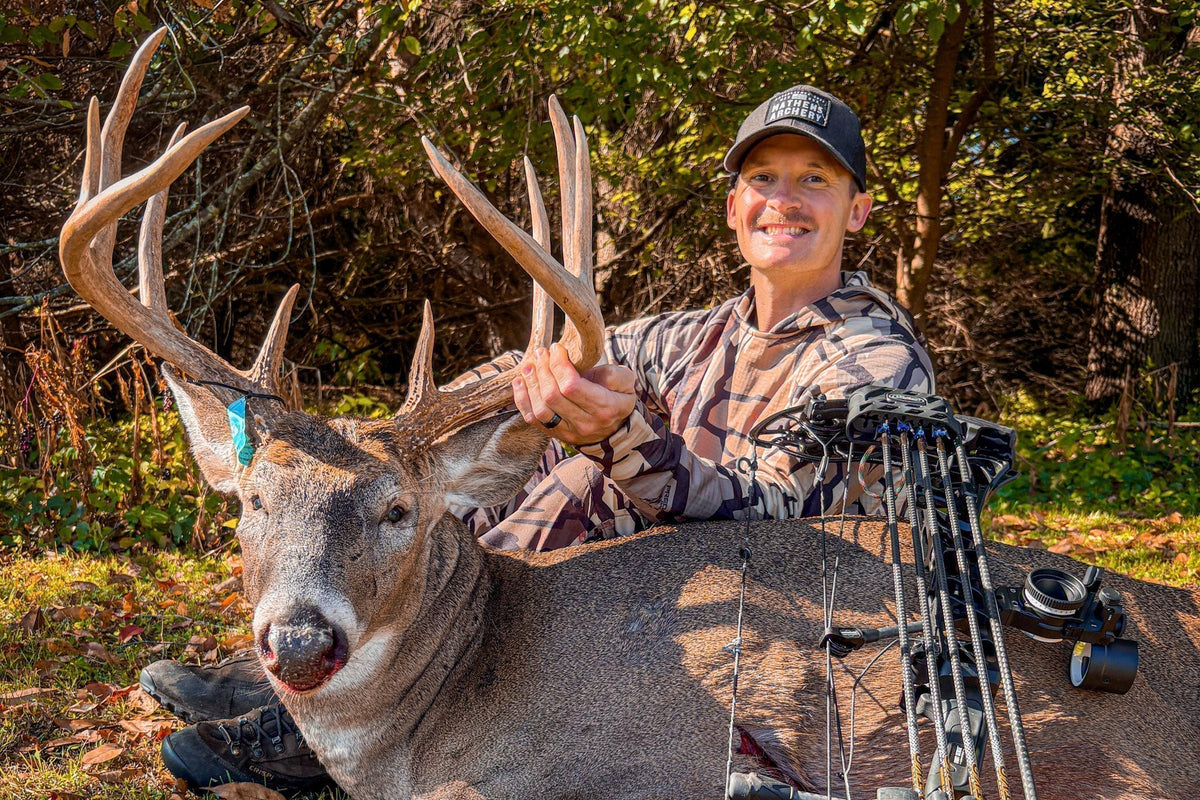
Hunting big deer in the mountains is an amazing and really rewarding experience. While I do enjoy the opportunity to hunt the ag lands of the Midwest, I love hunting the big hills of the east more in many ways. Its one-part western elk hunting and one part Midwest whitetail hunting. There is something really intriguing and quite honestly amazing about a buck that lives in such remote areas. It can be frustrating and I promise you it will test your patience and mental resolve to push on and keep after it. But, if you’re lucky enough to see one of these mountain giants and if you’re lucky enough to wrap your hands around the antlers of such an animal, it’s worth all the sweat and work getting there.

Share: